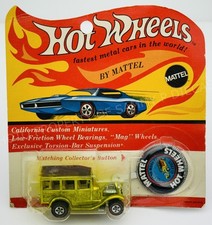
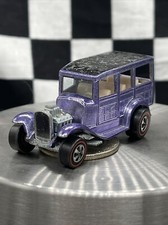
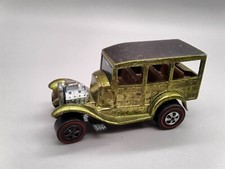
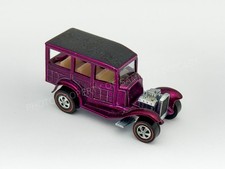
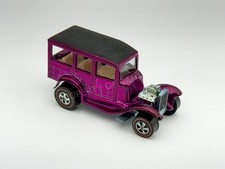
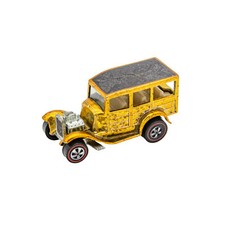
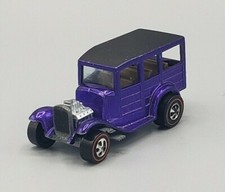
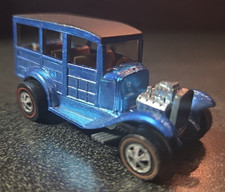
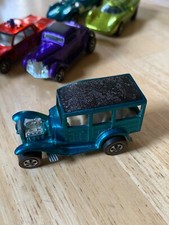
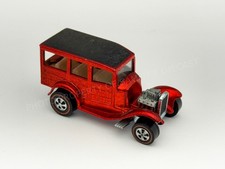
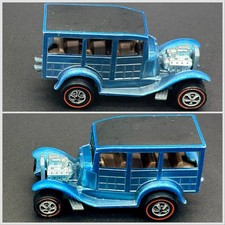
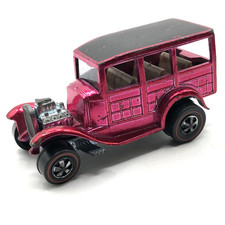
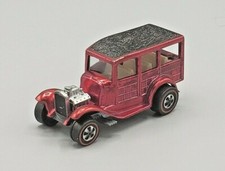
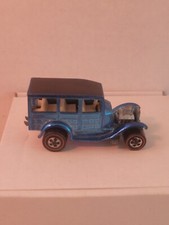
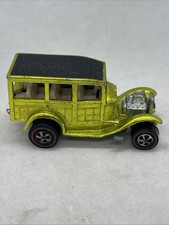
1969 Hot Wheels Redline Classic 31 Ford Woody Collector Guide
Quick Value Snapshot
| Item |
Collector Notes |
| Model |
Classic '31 Ford Woody |
| Designer |
Ira Gilford |
| Production Run |
1969-1971 |
| Production Location |
United States only |
| Wheel/Base Info |
4 medium Redline wheels |
| Common Roof Variations |
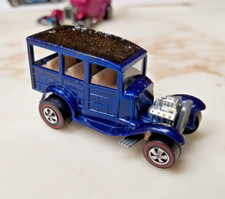
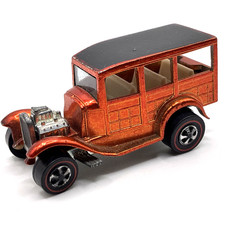
Textured roof and flat-black roof are known and common; these roof differences generally do not add value by themselves. |
| Rare/Important Version |
Brown is considered highly rare and is believed to be a pre-production-only color because it has not been confirmed in a blisterpack. |
| Value Confidence |
Market confidence depends heavily on verified sold prices, color, originality, and condition. Without confirmed comparable sales, exact value confidence is limited. |
Collector Summary
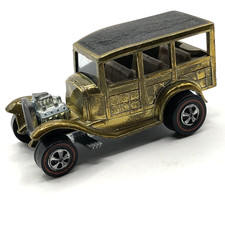
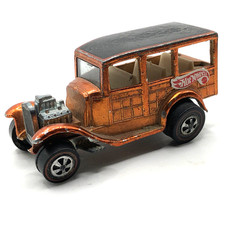
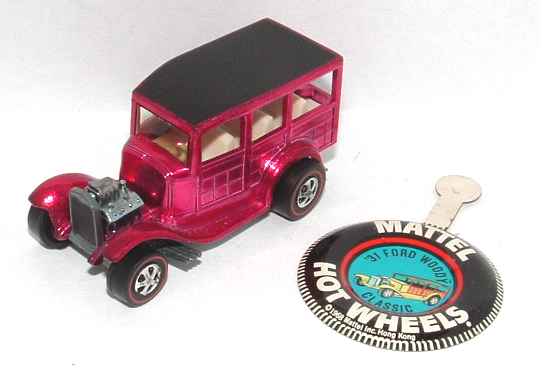
The 1969 Hot Wheels Redline Classic '31 Ford Woody is an early Redline-era casting designed by Ira Gilford and produced from 1969 through 1971. It was produced only in the United States and uses four medium Redline wheels. The casting represents a customized classic Ford wood-bodied wagon and is part of the early Mattel Redline period that is widely collected by both entry-level and advanced collectors.
For collectors, the Classic '31 Ford Woody is valued primarily by originality, color, paint condition, wheel condition, base condition, and completeness. Roof texture differences are recognized, but the supplied production notes indicate that textured and flat-black roof variations are common and should not be treated as premium variations by themselves.
The most significant color note is the highly rare brown version. Collector knowledge treats the brown Classic '31 Ford Woody as likely pre-production only, and it has not been found in a blisterpack. Because of that, brown examples require extra scrutiny, strong provenance, and careful authentication.
Known Variations and Details
- Casting name: Classic '31 Ford Woody.
- Designer: Ira Gilford.
- Production years: 1969-1971.
- Country of production: United States only.
- Wheels: Four medium Redline wheels.
- Roof variations: Textured roof and flat-black roof are known. These are considered common variations and generally do not increase value on their own.
- Rare color note: Brown is highly rare and believed to be a pre-production model only.
Color and Desirability Notes
Color is one of the strongest value drivers for original Redline Hot Wheels, but it must be judged together with condition and authenticity. A bright, original car with clean paint, good glass, strong wheels, and an undamaged base will usually be more desirable than a heavily worn example in the same color.
The brown version deserves separate treatment. It is not a normal production color in the way collectors usually evaluate blisterpack-issued examples. Since the brown Classic '31 Ford Woody is believed to be pre-production only and has not been confirmed in a blisterpack, it should not be priced using ordinary loose production examples as direct comparables. Authentication, provenance, and expert review are especially important.
Textured and flat-black roof differences are often noticed by collectors, but the supplied notes indicate these are common variations and do not add value by themselves. A seller should not present a common roof finish as a major rarity unless there is clear, documented evidence supporting that claim.
Condition Factors That Affect Value
- Original paint: Original Spectraflame-style finish is a major factor. Repainted or touched-up cars should be valued separately from untouched originals.
- Paint wear: Edge wear, roof wear, hood wear, rear corner wear, and toning can reduce desirability.
- Body damage: Bent posts, cracked castings, heavy oxidation, or body distortion can significantly affect value.
- Wheels: The car should have four medium Redline wheels. Bent axles, missing redlines, replacement wheels, or incorrect wheel sizes should be disclosed.
- Base condition: Clean, undamaged bases are preferred. Heavy corrosion, tool marks, or drilled posts reduce originality.
- Glass and interior: Cracks, clouding, warping, missing interior pieces, or replaced parts can affect value.
- Completeness: A complete, original example is more collectible than a car with reproduction, swapped, or missing parts.
- Packaging: A confirmed original blisterpack example, if present, must be evaluated separately from loose cars. Packaging condition, card authenticity, and blister integrity matter.
Restorer Notes
The Classic '31 Ford Woody is a legitimate restoration candidate when the original car is already damaged, heavily worn, or incomplete. However, restored examples should never be represented as original. Restorations, repaints, replacement wheels, reproduction parts, and recreated details should be clearly disclosed when buying or selling.
Because roof finish variations are known and common, restorers should avoid overstating a textured or flat-black roof as a rare restoration target. The more important restoration concern is accuracy: correct casting, correct general finish, appropriate wheels, and clean assembly without damaging the original posts or base.
Restored examples can be attractive display pieces, but they should be priced and described separately from original Redline examples. For collector reference purposes, restored cars should not be used as normal market comparables for original cars.
Buyer Cautions
- Separate asking prices from sold prices: Active listings show what a seller hopes to receive, not confirmed market value.
- Check originality: Look for signs of repainting, polishing, touch-up, replaced wheels, drilled posts, or reproduction parts.
- Be careful with brown examples: Brown is considered highly rare and likely pre-production only. Require strong photos, provenance, and expert review before paying a premium.
- Do not overpay for common roof differences: Textured and flat-black roofs are common variations and do not add value by themselves.
- Avoid wrong comparables: Do not compare original cars to customs, restored cars, repaints, damaged examples, parts cars, lots, or wrong-casting listings.
- Inspect wheels: Confirm the car has four medium Redline wheels and that they are not modern replacements.
- Watch for altered listings: Terms such as “rare,” “prototype,” or “pre-production” should be supported by evidence, not just seller wording.
Seller Notes
When selling a Classic '31 Ford Woody, provide clear photos of the front, rear, both sides, roof, base, wheels, posts, interior, and any damaged areas. Accurate condition disclosure will help serious collectors evaluate the car and reduce disputes.
If the car is original, state that carefully and support it with detailed photos. If it has been restored, repainted, touched up, polished, re-wheeled, or fitted with reproduction parts, disclose that plainly. Restored and original examples appeal to different buyers and should not be presented as equivalent.
For pricing, use confirmed sold prices for comparable original examples whenever possible. Active asking prices may help show seller expectations, but they should not be described as market value unless supported by actual completed sales.
Pricing Analysis
No specific verified sold-price dataset was supplied for this page, so exact price ranges should be treated with limited confidence. The correct market approach is to separate original loose examples, packaged examples, restored examples, customs, damaged cars, and suspected pre-production pieces into different groups.
For normal production examples, value is driven by color, paint condition, originality, wheel condition, and completeness. A clean original car with strong paint and correct wheels should be evaluated against other clean original sold examples. A worn, chipped, oxidized, or wheel-damaged example should be compared only to similarly worn examples.
Active asking prices should be treated cautiously. Sellers may ask more than the market will support, especially when using words such as “rare” or when emphasizing roof finish differences. An asking price is not the same as a completed sale.
Brown examples should be analyzed separately from standard production colors. Because brown is believed to be pre-production only and has not been found in a blisterpack, ordinary production-car pricing may not apply. Any strong price result for a brown example would need to be evaluated in light of authentication, provenance, and buyer confidence.
Listings to Exclude or Treat Carefully
- Repainted cars listed without clear disclosure.
- Restored cars being compared to original examples.
- Custom builds or fantasy color versions.
- Cars with reproduction wheels, reproduction parts, or replacement interiors.
- Damaged examples with cracked, bent, oxidized, or heavily worn castings.
- Large lots where the individual car condition cannot be confirmed.
- Listings using active asking prices as proof of value.
- Wrong-casting or misidentified listings.
- Brown examples without strong authentication or provenance.
- Listings claiming a roof finish is rare or premium when the only difference is a common textured or flat-black roof.
New Collector Advice
If you are new to Redlines, start by learning how to identify original paint, correct Redline wheels, base condition, and signs of restoration. The Classic '31 Ford Woody is a good casting for learning because it has visible condition points and known common roof differences.
Do not assume that every variation is valuable. The textured roof and flat-black roof are known, but they are common and should not create a major premium by themselves. Focus first on originality and condition.
Before buying a high-priced example, compare it with confirmed sold examples of similar condition. Avoid using active asking prices as your only guide. If the car is brown or claimed to be pre-production, seek experienced collector input before purchasing.
Advanced Collector Notes
Advanced collectors should pay close attention to originality, finish consistency, base condition, and wheel correctness. Because the model was produced only in the U.S., country-of-origin details are straightforward compared with castings that have both U.S. and Hong Kong production.
The brown version remains the key advanced-collector issue. Since it is believed to be pre-production only and has not been confirmed in blisterpack form, authentication should include detailed inspection of paint, assembly, wear consistency, and provenance. Brown examples should not be casually grouped with normal production colors in price guides or sales comparisons.
Roof finish should be recorded for reference, but not automatically treated as a value multiplier. Textured and flat-black roofs are common variations according to the supplied production notes.
Short Page Blurb
The 1969 Hot Wheels Redline Classic '31 Ford Woody was designed by Ira Gilford and produced in the U.S. from 1969 to 1971 with four medium Redline wheels. Textured and flat-black roof variations are common and generally do not add value by themselves. The brown version is highly rare and believed to be pre-production only, requiring careful authentication.
Disclaimer
This guide is for collector reference only. Values can change based on condition, originality, color, buyer demand, and availability of verified comparable sales. Active asking prices are not the same as actual sold prices. Repaints, restorations, customs, reproduction parts, damaged examples, large lots, and misidentified listings should not be treated as normal price comparables for original examples.
 Total results 0