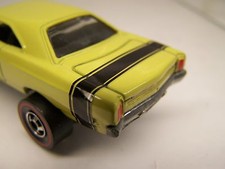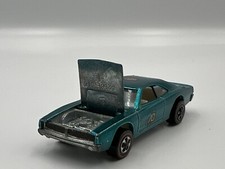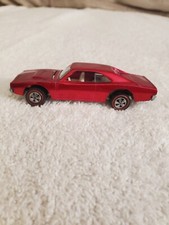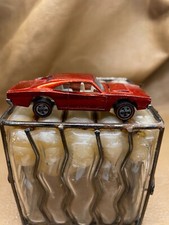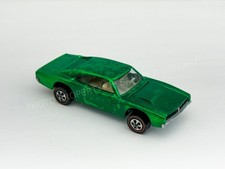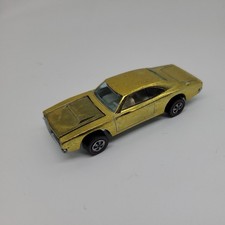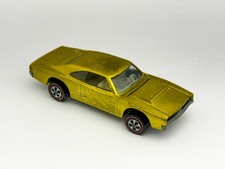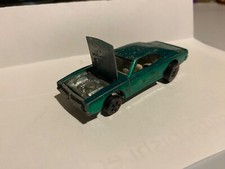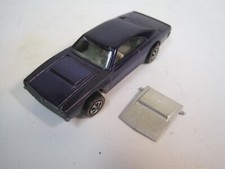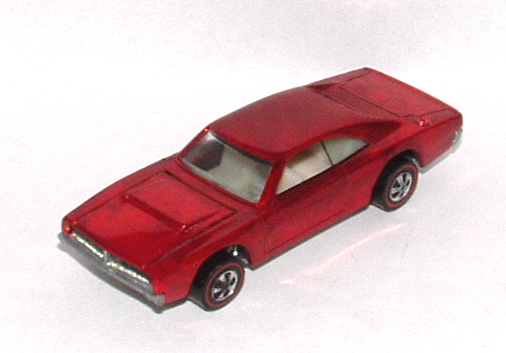
Casting #: 6268
Custom Charger
Designer: Ira Gilford
Production Run: 1960-1971
Note: Produced only in the U.S. The brown version is believed to be a prototype, as it has never been found in blisterpack. This casting remains one of the more popular in the Hot Wheels line, and is seldom picked up on the secondary at "bargain" prices. You can expect to pay a decent amount for one in good condition.
Picture and description thanx to NCHWA.comOpenAI/ChatGPT Collector Guide
1969 Hot Wheels Redline Custom Charger Collector Guide
Quick Value Snapshot
| Category |
Collector Notes |
| Casting |
1969 Hot Wheels Redline Custom Charger |
| Designer |
Ira Gilford |
| Production |
Introduced for the 1969 Redline era and listed in supplied notes as running through 1971. Hot Wheels production began in 1968, so any reference to 1960 should be treated as a database typo. |
| Production origin |
Produced only in the U.S. |
| Wheel setup |
2 medium wheels and 2 small wheels |
| General demand |
Consistently popular among Redline collectors and not commonly found at bargain prices in good original condition. |
| Pricing confidence |
Limited without current verified sold-price data. Use completed sold examples, not active asking prices, to judge current market value. |
Collector Summary
The 1969 Hot Wheels Redline Custom Charger is one of the better-known American-made Redline castings from the early Hot Wheels period. Designed by Ira Gilford, it represents the custom-styled muscle car look that helped define the line. The casting is a U.S.-only production piece and is noted for its mixed wheel setup of two medium wheels and two small wheels.
This model remains popular with both new and advanced Redline collectors. Clean, original examples are usually sought after, especially when the paint, wheels, glass, interior, and base all remain correct and unrestored. Because collector demand is steady, nice examples are not usually picked up cheaply unless condition issues, incorrect parts, or listing errors are involved.
Known Variations and Details
- Designer: Ira Gilford.
- Production: Introduced for the 1969 Redline line, with supplied notes listing production through 1971.
- Country of production: U.S. only.
- Wheel configuration: Two medium wheels and two small wheels.
- Era: Original Hot Wheels Redline period.
- Finish: Original examples are generally collected by factory paint color, originality, and condition.
For authentication, collectors should evaluate the casting, base, wheel type, rivets, paint surface, interior, and glass together. A correct-looking color alone is not enough to confirm originality.
Color and Desirability Notes
The Custom Charger was produced in multiple Redline-era colors, and color can have a major effect on desirability. Common collector preferences generally favor clean, bright, original Spectraflame finishes with minimal toning, edge wear, or corrosion. Less frequently encountered colors, especially when paired with strong condition, can bring stronger collector attention.
The supplied notes state that the brown version is believed to be a prototype because it has not been found in blisterpack. Brown examples should therefore be treated separately from normal production colors. A claimed brown Custom Charger requires careful authentication, provenance, and expert review. It should not be used as a normal price comparison for regular production examples.
Condition Factors That Affect Value
- Original paint: Factory paint is a primary value driver. Repainted or restored cars should not be compared directly with untouched originals.
- Paint wear: Hood edges, roof lines, fenders, door lines, and raised body edges are common places to check for chips and rubs.
- Spectraflame quality: Bright, even color is generally more desirable than heavily toned, faded, cloudy, or oxidized paint.
- Base condition: A clean original base with correct rivets is important. Heavy corrosion, polishing, drilled posts, or altered rivets reduce collector confidence.
- Wheels: Correct Redline wheels should match the expected two-medium, two-small setup. Cracked, swapped, bent, or reproduction wheels affect value.
- Axles: Straight axles and properly sitting wheels are preferred. Bent axles, wobble, or poor stance should be disclosed.
- Glass and interior: Cracks, warping, missing parts, discoloration, or incorrect replacement parts reduce originality.
- Toning and corrosion: Redline castings can suffer from paint toning, base oxidation, and metal fatigue. These issues should be evaluated separately from ordinary play wear.
- Packaging: If blisterpack or original packaging is present, it must be authenticated. Packaging condition can strongly affect desirability, but loose and packaged examples should not be priced together.
Restorer Notes
The Custom Charger is a popular restoration candidate because original examples with heavy wear are more obtainable than high-grade originals. Restored cars can display well, but they occupy a different market than original Redlines.
- Always disclose drilled posts, repainting, wheel replacement, reproduction parts, and any base or body polishing.
- Do not describe a restored car as original, mint, or factory-fresh.
- Reproduction wheels, glass, interiors, and decals should be identified clearly if used.
- Restoration quality varies widely. A clean restoration is not the same as an untouched original in collector pricing.
- If the car has been restored to resemble a rare color, it should not be priced or represented as a rare original variation.
Buyer Cautions
- Separate asking prices from sold prices: Active listings show what sellers hope to receive. They do not prove market value.
- Watch for restored examples: Fresh paint, unusually perfect color, polished bases, and disturbed rivets can indicate restoration.
- Check wheel sizes: The supplied wheel information is two medium wheels and two small wheels. Incorrect wheel setups may indicate swaps or repairs.
- Be cautious with rare color claims: Especially with brown examples, request provenance and expert confirmation.
- Avoid bad comparisons: Do not use lots, customs, repaints, damaged cars, or wrong-casting listings as normal value examples.
- Review photos carefully: Ask for clear images of the top, sides, front, rear, base, wheels, axles, rivets, glass, and interior.
- Confirm originality before paying a premium: High-grade Redlines can be difficult to authenticate from poor photos alone.
Seller Notes
- State whether the car is original, restored, repaired, or uncertain.
- Photograph the base and rivets clearly.
- Show all sides of the body under neutral lighting so buyers can judge paint wear and toning.
- Identify wheel condition, axle straightness, glass condition, interior condition, and any missing or replaced parts.
- If selling a rare color claim, provide provenance and detailed photos. Do not rely on color name alone.
- Do not price a loose played example against packaged, near-mint, prototype, or exceptional-condition examples.
Pricing Analysis
No current verified sold-price dataset was supplied for this page, so exact value confidence is limited. The Custom Charger is known as a consistently popular Redline casting, and good original examples generally receive stronger collector interest than heavily played, restored, or incomplete cars.
Active asking prices: Active listings should be treated as seller expectations only. They may be too high, may sit unsold, or may include restored cars, repaints, incorrect parts, damaged examples, or misidentified castings. Asking prices are useful for seeing availability, but they should not be treated as market value by themselves.
Actual sold prices: Completed sales of verified original examples are the best pricing guide. Compare only like-for-like examples: same casting, original paint, similar color desirability, similar condition, correct wheels, similar completeness, and comparable packaging status if applicable.
Outliers: Prototype claims, especially brown examples, should be separated from normal production pricing. Exceptional condition, original packaging, unusual provenance, or confirmed rare color status can create results that are not representative of ordinary loose examples. Likewise, very low results may reflect damage, poor photos, restoration, missing parts, or seller misidentification.
Listings to Exclude or Treat Carefully
- Repainted or restored cars unless restoration value is specifically being studied.
- Custom builds or fantasy color repaints.
- Cars with reproduction wheels, glass, interiors, or other replacement parts unless clearly disclosed.
- Drilled-base examples represented as original.
- Mixed lots where the individual Custom Charger value cannot be separated.
- Damaged examples with heavy corrosion, broken parts, missing wheels, or severe axle problems.
- Wrong-casting listings or listings using the Custom Charger name incorrectly.
- Prototype-color claims without provenance or expert review.
- Active listings used as proof of value without completed-sale support.
New Collector Advice
If you are new to Redlines, focus first on originality and condition rather than chasing the rarest color. A solid original Custom Charger with honest light wear is usually a better learning piece than a questionable high-priced example with poor photos or vague claims.
- Learn the correct U.S. casting details and wheel setup.
- Compare several original examples before buying.
- Ask whether the car has been drilled, repainted, or repaired.
- Do not assume shiny paint means original paint.
- Use completed sold examples for price research, not only current listings.
Advanced Collector Notes
Advanced collectors should pay close attention to factory originality, color authenticity, paint texture, toning patterns, wheel correctness, rivet condition, and provenance. Because the Custom Charger is a popular casting, high-grade examples and unusual color claims can draw extra scrutiny.
Brown examples are the most sensitive area noted in the supplied data. Since brown is believed to be a prototype color and has not been found in blisterpack, any such example should be evaluated outside normal production-color pricing. Authentication should involve detailed inspection, comparison to known factory paint characteristics, and documented ownership history when possible.
Short Page Blurb
The 1969 Hot Wheels Redline Custom Charger, designed by Ira Gilford, is a U.S.-only Redline casting with a two-medium, two-small wheel setup. It remains a popular collector car, with value driven by originality, color, condition, and correct parts. Brown examples are believed to be prototypes and should be treated separately from normal production cars.
Disclaimer
Values for vintage Hot Wheels Redlines change over time and depend heavily on condition, originality, color, completeness, provenance, and buyer demand. This guide does not guarantee exact values. Active asking prices are not the same as actual sold prices. Restored cars, repaints, customs, reproduction-part examples, damaged cars, lots, and wrong-casting listings should not be used as normal market comparisons for original examples.
Gemini/Google AI Collector Guide
1969 Hot Wheels Redline Custom Charger Collector Guide
Quick Value Snapshot
The Custom Charger is a high-demand casting. Values fluctuate based on color rarity and the presence of original paint and parts.
| Condition |
Estimated Price Range (Sold) |
| Fair / Played With |
Moderate (Significant wear, but intact) |
| Good / Fine |
Premium (Solid paint, straight axles) |
| Excellent / Near Mint |
High (High luster, minimal "toning" or chips) |
| Unopened Blisterpack |
Top Tier (Extremely rare for this casting) |
Collector Summary
Designed by Ira Gilford and produced during the 1969-1971 era, the 1969 Custom Charger is a pillar of the Hot Wheels Redline collection. Unlike many other castings from this period, production was limited to the United States. It remains one of the most consistently popular models among enthusiasts, known for its sleek profile and aggressive stance. This model rarely appears at "bargain" prices on the secondary market; collectors should expect to pay a premium for examples in original, high-grade condition.
Known Variations and Details
- Production Location: United States only.
- Wheel Setup: Features a staggered look with 2 Medium wheels in the rear and 2 Small wheels in the front.
- Base Info: Zinc-plated or unpainted metal base typical of U.S. production.
- Moving Parts: Opening hood that reveals a detailed engine.
Color and Desirability Notes
The Custom Charger was released in various Spectraflame colors. While common colors like Blue or Green are more frequently seen, they still command high prices due to the popularity of the casting. Brown is the most significant color variant; it is widely believed to be a prototype because no confirmed examples have been found in original blisterpacks. If a brown example appears, it is treated as a museum-grade rarity.
Condition Factors That Affect Value
- Spectraflame Quality: "Toning" (darkening of the paint over time) can decrease value, whereas "bright" examples command much higher prices.
- Hood Fitment and Function: The hood hinges are a weak point. A hood that stays open and sits flush when closed is essential for top-tier pricing.
- Glass Clarity: Scratched or cracked blue-tinted windshields significantly detract from the value.
- Chrome Loss: Heavy wear on the wheel chrome or the engine detail reduces desirability.
Restorer Notes
Because the Custom Charger is so valuable, many examples found today have been restored or modified. Restorers should note that the hood is a separate piece and often goes missing. High-quality reproduction glass and wheels are available, but these must be disclosed during any sale. Collectors generally prefer "survivor" cars over those that have been "Code 3" (modified) or repainted.
Buyer Cautions
Buyers should be wary of listings claiming "Mint" condition at suspiciously low prices. Due to the high value of this casting, it is a frequent target for "tribute" customs or high-end restorations passed off as original. Always inspect the rivets on the base to ensure the car has not been opened and repainted. Be aware that "asking prices" on major auction sites are often aspirational and do not reflect the actual market value.
Seller Notes
When selling a Custom Charger, clear photography of the base, the engine bay, and the roof is vital. If the car is a rare color or has exceptionally clean "flower power" decals (if applicable from later runs), highlight these features. Document any chips or "flea bites" in the paint to build trust with high-end bidders.
Pricing Analysis
The market for the Custom Charger is stable with a high floor. While other castings may see volatile price swings, the Charger has maintained its status as a "must-have" for decades.
- Sold Prices: Actual transactions show a steady demand for mid-grade cars, with a massive jump in price for "Spectraflame-bright" examples.
- Asking Prices: Often inflated by 30-50% over actual market value. High asking prices do not indicate a change in market value until a confirmed sale occurs.
- Confidence: High. There is a large volume of historical data for this casting, though data on the Brown prototype is extremely thin.
Listings to Exclude or Treat Carefully
- Customs/Repaints: These do not represent the value of original Redlines.
- Missing Hoods: These are considered "parts cars" and should be priced significantly lower.
- Wrong Castings: Ensure the listing is for the 1969 Custom Charger and not the later "Large Charge" or 1970s variations.
- Restored/Reproduction Parts: Cars with reproduction wheels or glass should be valued lower than 100% original examples.
New Collector Advice
If you are just starting, look for a "Good" condition example with some play wear to keep costs manageable. The Custom Charger is a cornerstone of a Redline collection, but because it is rarely found as a "bargain," it is often better to save for one high-quality example rather than several damaged ones.
Advanced Collector Notes
Advanced collectors focus on "no-tone" examples and specific US-production nuances. The hunt for the Brown prototype remains a legendary pursuit in the hobby. Verified "Transition" models or those with unique interior colors may also command specialized interest.
Short Page Blurb
The 1969 Hot Wheels Redline Custom Charger is a US-produced classic designed by Ira Gilford. Known for its staggered wheel sizes and opening hood, it remains a high-value favorite. Avoid common pitfalls by checking for original paint and intact hinges. This is a must-have for any serious Spectraflame-era collection.
Disclaimer
Pricing data is based on historical market observations and collector knowledge. Value is subjective and can change based on buyer demand and auction timing. This guide does not guarantee specific financial outcomes for buyers or sellers.
Online Redline Guide / Color Reference
Wheels: 2 Med, 2 Sm
US Colors
| Color | Comments |
|---|
| blue | common |
| gold | common |
| green | common |
| lime/yellow | common |
| red | common (bearing wheels) |
| purple | uncommon |
| magenta | uncommon |
| hot pink | uncommon |
| rose | uncommon |
| light green | uncommon |
| aqua | uncommon |
| yellow | uncommon |
| orange | hard to find |
| antifreeze | hard to find |
| creamy pink | hard to find |
| light blue | very rare |
| brown | very rare; may be a prototype |
NCHWA.com Ratings
MINT Loose pricing below probably. Check ebay for blister pricing.
Note that these values are very old. Typical selling prices can be significantly higher now. Check the AI summaries for more info or ebay listings here.
Please see NCHWA.com Grading Page to reduce value due to condition.
| Color | US
Rating | US
Value | HK
Rating | HK
Value |
|---|
| Red | 5 | $113 | . | . |
| Lime | 5 | $113 | . | . |
| Blue | 6 | $138 | . | . |
| Gold | 6 | $138 | . | . |
| Green | 8 | $188 | . | . |
| Magenta | 8 | $188 | . | . |
| Rose | 9 | $213 | . | . |
| Yellow | 10 | $238 | . | . |
| Purple | 10 | $238 | . | . |
| Light Green | 10 | $238 | . | . |
| Hot Pink | 12 | $288 | . | . |
| Aqua | 13 | $326 | . | . |
| Orange | 15 | $426 | . | . |
| Antifreeze | 17 | $526 | . | . |
| Brown | 40+ | $5,200 | . | . |
| | . | | . |
Looking for reproduction redline parts?

Total results 4
Average price for this page is $12